โรงเรียนเปิดเรียนมาแล้วสักระยะหนึ่ง เด็ก ๆ และคุณพ่อคุณแม่หลายบ้านกำลังเรียนรู้และก้าวผ่านเรื่องสำคัญที่เกิดขึ้นกับเด็กเล็ก นั่นคือเรื่องของการแยกจากพ่อแม่ การบอกลา และการปรับตัว สู่การเริ่มใช้ชีวิตที่ต้องมีผู้อื่นเข้ามาเกี่ยวข้อง เพราะตามธรรมชาติแล้วเด็กเล็กจะมีความผูกพันในลักษณะที่รู้สึกว่าตนเป็นคนคนเดียวกับพ่อแม่ เนื่องจากเด็ก ๆ อยู่กับพ่อแม่ตลอดเวลา พ่อแม่รู้ใจทุกอย่างว่าเขากำลังต้องการอะไร และพ่อแม่จะตอบสนองอย่างไร ทำให้เด็ก ๆ รู้สึกปลอดภัย จึงอยากอยู่กับพ่อแม่ตลอดเวลา ไม่อยากแยกไปไหน เมื่อถึงเวลาที่ต้องห่างพ่อแม่มาเริ่มรู้จักผู้คนและใช้ชีวิตอยู่ร่วมกับคนที่ไม่คุ้นเคย ย่อมเป็นเรื่องยากและท้าทายหัวใจของทั้งลูกและพ่อแม่เสมอ
หลายคำถามคงเกิดขึ้นในหัวใจของพ่อแม่ว่า ลูกจะอยู่ จะกิน จะเล่นอย่างไร? จะร้องไห้นานไหม? ครูจะรักลูกเราหรือเปล่า? ลูกเราจะเหงามากไหมถ้าไม่มีเรา? สิ่งที่ยกตัวอย่างมานั้นอาจเป็นเพียงเศษเสี้ยวของความรู้สึกที่เกิดขึ้นหลังจากส่งลูก ๆ เด็ก ๆ ก็คงรู้สึกเช่นกันว่าพ่อแม่จะมารับไหม ถ้าพ่อแม่ไม่อยู่จะไว้ใจใคร มีอะไรหลายอย่างที่เด็ก ๆ ต้องปรับตัวในการอยู่ร่วมกันในห้องเรียน
คุณครูจึงอยากชวนพ่อแม่ให้เห็นอีกมุมมองหนึ่ง คือ ลูกกำลังเรียนรู้เรื่องของการจากลา ซึ่งในยามที่เด็ก ๆ ร้องไห้ ไม่อยากมาเรียน คิดถึงคุณพ่อคุณแม่นั้นเป็นอาการที่เกิดขึ้นตามกลไกธรรมชาติ ที่จะทำให้เด็กรับรู้ถึงการปรับตัวอยู่ร่วมกับผู้อื่น และกำลังจะได้ทดลองวิชาที่คุณพ่อคุณแม่พาสอนพาทำตอนที่อยู่ที่บ้าน นั่นคือการฝึกดูแลตัวเอง เมื่อเด็กเกิดความมั่นคงจากการที่เขาสามารถดูแลตนเองได้ เขาจะสามารถปรับตัวในยามที่มาโรงเรียน
ในแต่ละวันที่มาโรงเรียน เด็ก ๆ กำลังพยายามทำสิ่งต่าง ๆ และรับรู้เรื่องที่เกิดขึ้น หากคุณพ่อคุณแม่แสดงความมั่นคงแล้วส่งต่อให้ลูกรับรู้ ไม่ว่าจะด้วยท่าทีหรือคำพูด เช่น ไปเล่นกับเพื่อน ๆ คุณครูจะดูแลหนูเหมือนพ่อกับแม่จ้ะ ถ้าหนูอยากให้ครูช่วยอะไร หนูบอกคุณครูได้เลยนะจ๊ะ ถึงเวลาเลิกแล้วแม่จะมารับจ้ะ สำหรับบทบาทคุณครูจะให้ความเมตตาเปรียบเสมือนแม่ที่เข้าใจและสร้างความวางใจให้กับลูก ๆ เมื่อคุณพ่อคุณแม่และคุณครูทำงานไปในทิศทางเดียวกัน คุณครูเชื่อว่าอีกไม่นานเด็ก ๆ จะปรับตัวได้ และมาโรงเรียนด้วยอารมณ์ที่มั่นคง รู้สึกว่าโรงเรียนคือบ้านที่มีครูเป็นแม่ มีเพื่อนเป็นพี่น้อง เป็นครอบครัวรุ่งอรุณที่อบอุ่นของเด็ก ๆ ทุกคน
เรื่อง: ครูแอร์-เรวดี ดุงศรีแก้ว อนุบาลรุ่งอรุณ
ภาพ: สื่อสารองค์กรโรงเรียนรุ่งอรุณ
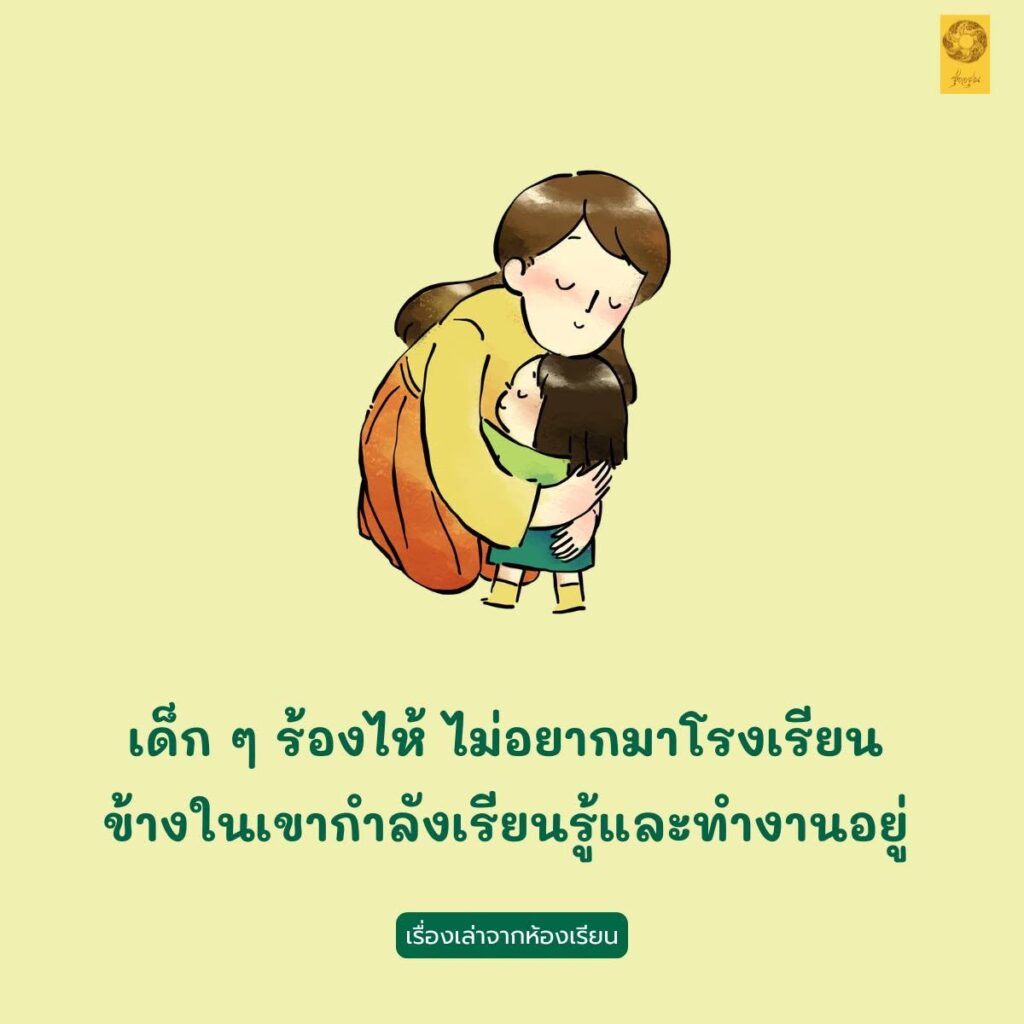
The children are crying and reluctant to come to school. Inside, they are learning and working.
The school has been open for a while. Children and their parents from many households are going through an important phase in their lives, which involves separation, saying goodbye, and adjusting to a new dynamic that includes interacting with others. Naturally, early childhood children have a strong bond with their parents, feeling that they are the center of their world since they are constantly together. Parents understand their children’s needs and respond accordingly, creating a sense of safety and security. As a result, children prefer to be with their parents at all times and resist being separated from them. However, when the time comes for them to separate from their parents and engage with unfamiliar people and new experiences, it can be emotionally challenging for both the children and their parents.
Many questions likely arise in the hearts of parents about their child’s well-being, eating, and playing. Will their child cry for a long time? Will the teacher love their child? Will their child feel extremely lonely without them? The exemplified questions mentioned above might only be a small fraction of the feelings that occur after dropping off the child. The child themselves would also feel the same uncertainty, wondering if their parents will come to pick them up. If their parents are not present, who can the child rely on? There are many things that children need to adjust to when being together in the classroom.
As teachers, we would like to encourage parents to consider an alternative perspective. The child is currently in the process of learning how to say goodbye, which is why they may cry and resist coming to school while missing their parents. These reactions are natural and necessary for the child to understand the concept of adjusting and interacting with others. Moreover, they are about to explore subjects that their parents have taught them at home, including self-care skills. When a child develops a sense of self-reliance and stability, they are better equipped to adapt to the school environment.
Each day, as children come to school, they actively explore and become aware of their surroundings. When parents exhibit stability and convey it to their children through actions and words, such as encouraging them to play with their friends, teachers step in and provide care just like parents would. If children need assistance, they can ask their teachers for help, and we assure them that we will be there to pick them up after school. In our role as teachers, we demonstrate compassion and foster trust in the children, akin to a mother’s care. This is especially important as both parents and teachers work together in the same direction. With time, children will adapt and arrive at school with a sense of stability, perceiving it as their second home, where teachers act as nurturing mothers and classmates become like siblings, fostering a warm and supportive family environment for everyone.
Author: Teacher Air – Rewadee Dungsrikaew, Roong Aroon Kindergarten
Illustrator: Roong Aroon School Corporate Communications